English
- English
- Español
- Português
- русский
- Français
- 日本語
- Deutsch
- tiếng Việt
- Italiano
- Nederlands
- ภาษาไทย
- Polski
- 한국어
- Svenska
- magyar
- Malay
- বাংলা ভাষার
- Dansk
- Suomi
- हिन्दी
- Pilipino
- Türkçe
- Gaeilge
- العربية
- Indonesia
- Norsk
- تمل
- český
- ελληνικά
- український
- Javanese
- فارسی
- தமிழ்
- తెలుగు
- नेपाली
- Burmese
- български
- ລາວ
- Latine
- Қазақша
- Euskal
- Azərbaycan
- Slovenský jazyk
- Македонски
- Lietuvos
- Eesti Keel
- Română
- Slovenski
- मराठी
- Srpski језик

CE Certified EU Standard Tools and Equipment for Industrial Applications
LINSHENG provides EU Standard Tools and Equipment for industrial distributors, construction companies, maintenance contractors, equipment manufacturers, and professional buyers worldwide. Based in China, we combine product development, manufacturing, quality inspection, and export services to supply tools and equipment designed for European working environments.
For professional procurement, choosing compliant tools is not simply about selecting the right size or material. Buyers also need to consider the working environment, electrical safety requirements, mechanical strength, ergonomics, measurement accuracy, certification documentation, and long-term availability. Our own factory supports EU Standard Tools and Equipment as well as customized specifications for different industries and projects.
How to Choose the Right Tools and Equipment
1. Match the Tool with the Working Task
Different operations require different tool structures and performance characteristics. Assembly work may require precision hand tools, electrical maintenance may require insulated tools, while construction and industrial maintenance can require heavy-duty equipment. Selecting the tool according to the actual task helps improve operating efficiency while reducing unnecessary wear and replacement costs.
2. Consider the Working Environment
Temperature, humidity, dust, chemicals, vibration, electrical exposure, and mechanical impact can all affect tool performance. Indoor assembly environments generally have different requirements from construction sites, workshops, outdoor maintenance areas, and industrial facilities. Buyers should provide the expected working conditions before confirming the final product configuration.
3. Evaluate Material and Durability
Tool material directly affects service life and mechanical performance. Alloy steel, chrome-vanadium steel, stainless steel, engineering plastics, and aluminum alloys can be selected according to the application. Heat treatment, surface finishing, corrosion protection, and structural reinforcement can further improve durability for demanding industrial use.
4. Check Ergonomics and Operator Comfort
Tools used repeatedly throughout the working day should provide a comfortable grip and balanced structure. Anti-slip handles, appropriate handle geometry, controlled operating force, and reduced hand fatigue can improve productivity during long-duration operations.
Product Solutions for Different Procurement Needs
1. Professional Hand Tools
Hand tools are suitable for assembly, maintenance, installation, repair, and construction work. Depending on the application, the range can include screwdrivers, pliers, wrenches, cutters, sockets, insulated tools, and other professional equipment. For electrical work, buyers should pay particular attention to the applicable insulation and voltage-related requirements.
2. Power Tools
Power tools are designed for applications where higher operating efficiency is required. Drilling, cutting, grinding, fastening, polishing, and other repetitive operations can benefit from electrically powered equipment. Buyers should evaluate voltage, power, speed, torque, duty cycle, protection class, and operator safety features before purchasing.
3. Measuring Instruments
Measuring instruments are used for dimensional inspection, electrical testing, production quality control, equipment maintenance, and laboratory applications. Depending on the measurement task, buyers may require specific accuracy levels, calibration documentation, environmental protection, data interfaces, or digital recording functions.
4. Industrial Supporting Equipment
Industrial facilities may require more than individual tools. Tool storage systems, workshop accessories, maintenance equipment, protective accessories, and specialized supporting products can be integrated into a complete procurement program. This approach can simplify purchasing and improve consistency across multiple production or maintenance locations.
European Compliance and Safety Considerations
1. EN and IEC Standards
The applicable EN or IEC standard depends on the product category and intended application. Electrical hand tools, power tools, measuring instruments, and other equipment may be subject to different technical requirements. Buyers should confirm the exact standard applicable to the selected model instead of applying one standard to every product.
2. CE Compliance
For EU Standard Tools and Equipment falling within applicable European Union legislation, CE marking and supporting technical documentation may be required. The specific compliance requirements depend on the product type, electrical characteristics, intended use, and destination market.
3. GS and Other Safety Certifications
For certain tools and equipment sold in European markets, additional voluntary or market-specific safety certifications may be requested by buyers or distributors. Where applicable, certification and test documentation can be discussed according to the exact product model.
4. RoHS and REACH Requirements
Environmental compliance can be an important part of European procurement. Depending on the product and applicable regulations, buyers may request RoHS and REACH-related documentation covering restricted substances and chemical requirements.
Performance Factors Buyers Should Compare
1. Mechanical Strength
For hand tools and industrial equipment, mechanical strength affects resistance to impact, torque, bending, and repeated operation. Material selection and heat treatment should be evaluated together with the intended working load rather than considering material name alone.
2. Electrical Safety
Tools intended for electrical maintenance require appropriate insulation, protection, and testing according to their intended voltage and working conditions. Buyers should confirm the applicable electrical safety standard and certification documentation before placing a bulk order.
3. Measurement Accuracy
For measuring instruments, accuracy, repeatability, calibration status, measurement range, and environmental conditions are critical purchasing factors. The required accuracy should be determined by the tolerance requirements of the production or inspection process.
4. Protection Against Environmental Conditions
Tools used in workshops and outdoor environments may require resistance to moisture, dust, corrosion, impact, or temperature variation. Where applicable, buyers can select products with appropriate protective structures and surface treatments for the intended environment.
Applications in European Industries
1. Manufacturing and Assembly
Factories use professional tools for equipment assembly, production-line maintenance, component installation, and quality inspection. Consistent tool specifications can help standardize operations across different production stations.
2. Construction and Building Maintenance
Construction contractors require durable tools for installation, structural assembly, electrical work, plumbing, finishing, and facility maintenance. Tool selection should consider frequent transportation, outdoor exposure, mechanical impact, and intensive daily use.
3. Automotive Manufacturing and Repair
Automotive applications require tools for vehicle assembly, component installation, inspection, repair, and maintenance. Precision fastening tools, hand tools, measuring instruments, and power equipment can be selected according to the production or service process.
4. Electrical and Industrial Maintenance
Electrical maintenance teams require tools designed for safe operation around electrical systems, while industrial maintenance personnel may need equipment capable of handling machinery, motors, control systems, and production-line components.
5. Precision Engineering
Precision manufacturing environments place greater emphasis on measurement accuracy, repeatability, calibration, and dimensional control. Measuring instruments can be integrated with digital data transmission and quality management systems where required.
OEM and Custom Procurement Options
1. Product Specifications
LINSHENG supports customization of dimensions, materials, hardness, working ranges, operating parameters, and other product specifications according to customer requirements and target applications.
2. Appearance and Identification
Product colors, surface finishes, laser markings, logos, labels, warning information, and identification codes can be customized for private-label and professional distribution programs.
3. Tool Sets and Combination Packages
For distributors and industrial buyers, individual tools can be combined into customized sets according to the actual application. Tool cases, storage boxes, carrying bags, and other packaging formats can also be selected.
4. Packaging and Export Requirements
LINSHENG can arrange individual packaging, retail packaging, industrial cartons, customized labels, barcodes, instruction manuals, and export packaging according to the customer's sales channel and destination market.
Quality Control Before Delivery
1. Raw Material Verification
Materials such as alloy steel, engineering plastics, stainless steel, and aluminum alloys can be inspected according to approved specifications before production. This helps maintain consistency between different production batches.
2. Manufacturing Process Inspection
Key processes such as forging, machining, heat treatment, grinding, coating, assembly, and electrical integration can be controlled according to the product type. Process inspection helps identify dimensional or structural deviations before final assembly.
3. Functional Testing
Finished products can undergo applicable mechanical, electrical, dimensional, operational, and safety testing according to the agreed specification. Measuring instruments can also be supplied with applicable calibration or inspection documentation when required.
4. Final Shipment Inspection
Before shipment, EU Standard Tools and Equipment can be checked for quantity, appearance, markings, specifications, accessories, packaging, and customer-specific requirements. This provides greater consistency for distributors and repeat industrial procurement.
Frequently Asked Questions
1. Are your tools manufactured according to European standards?
Products can be manufactured according to applicable EN and IEC requirements based on their specific category and intended use. The exact standard and compliance requirements should be confirmed according to the selected product before production.
2. Can you provide CE, GS, RoHS, or REACH documents?
Applicable compliance certificates, test reports, and technical documents can be provided according to the product model and destination market. Buyers can specify their documentation requirements during the quotation stage.
3. Do you support OEM and ODM customization?
Yes. As a direct manufacturer, LINSHENG supports OEM and ODM production, including product specifications, materials, colors, logos, packaging, tool combinations, and other project-specific requirements.
4. What is the typical lead time?
Standard products generally require around 15–20 days depending on quantity and production schedule. Customized products may require additional time for tooling, sample approval, material preparation, and production.
5. Can you supply complete tool sets for industrial projects?
Yes. We can combine different hand tools, power tools, measuring instruments, storage solutions, and accessories into application-specific packages according to the customer's procurement list and working requirements.
- View as
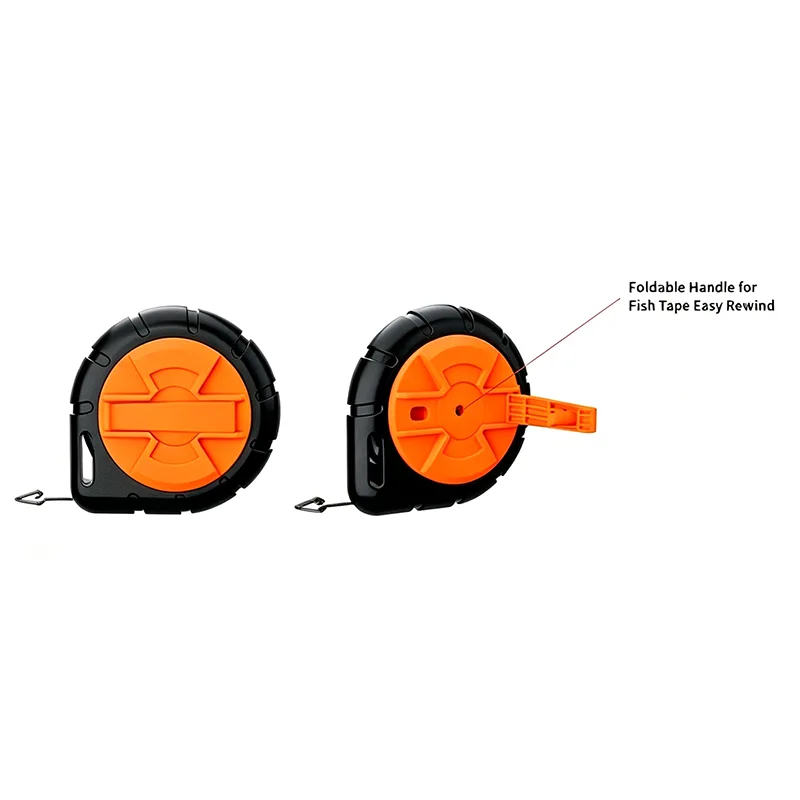
EU Standard Mini Fish Tapes
LINSHENG EU Standard Mini Fish Tapes are compact and professional cable pulling tools designed for efficient electrical wiring installation in residential, commercial, and industrial applications. With a lightweight structure, high-strength fiberglass rod, and ergonomic handle design, this mini wire puller provides electricians with a practical solution for pulling cables through conduits, walls, ceilings, and narrow installation spaces.
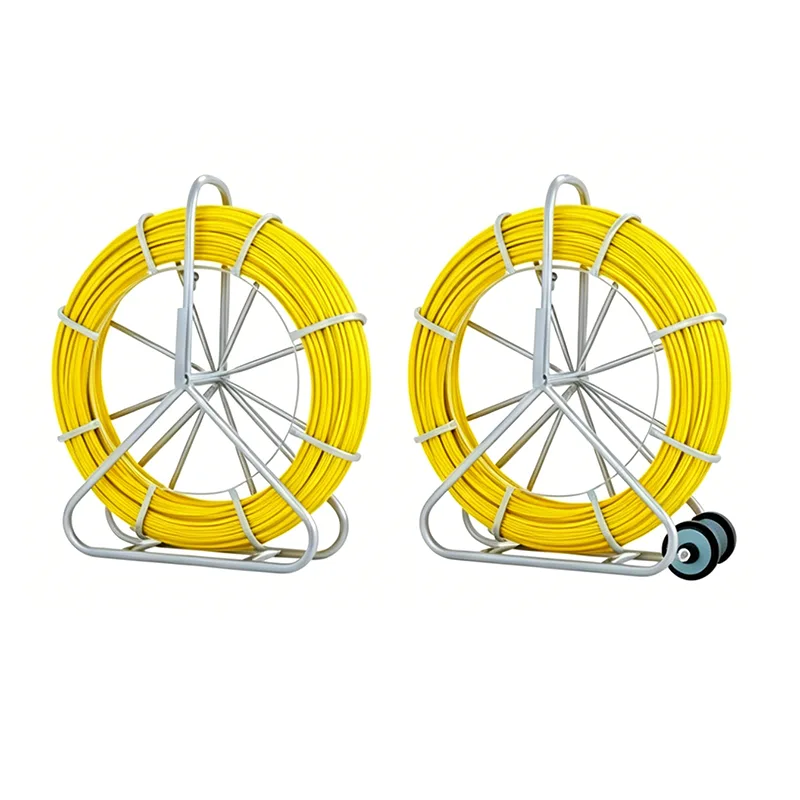
EU Standard Duct Rodders
LINSHENG EU Standard Duct Rodders are high-performance professional cabling tools that strictly adhere to EU electrical safety and construction standards. Suitable for various complex conduit wiring and cable laying projects, these products utilize aerospace-grade fiberglass composite materials and patented locking connectors, offering advantages such as ultra-high tensile strength, resistance to high and low temperatures, and excellent insulation safety. They are suitable for various construction scenarios, including indoor wiring, outdoor substations, and building renovations.
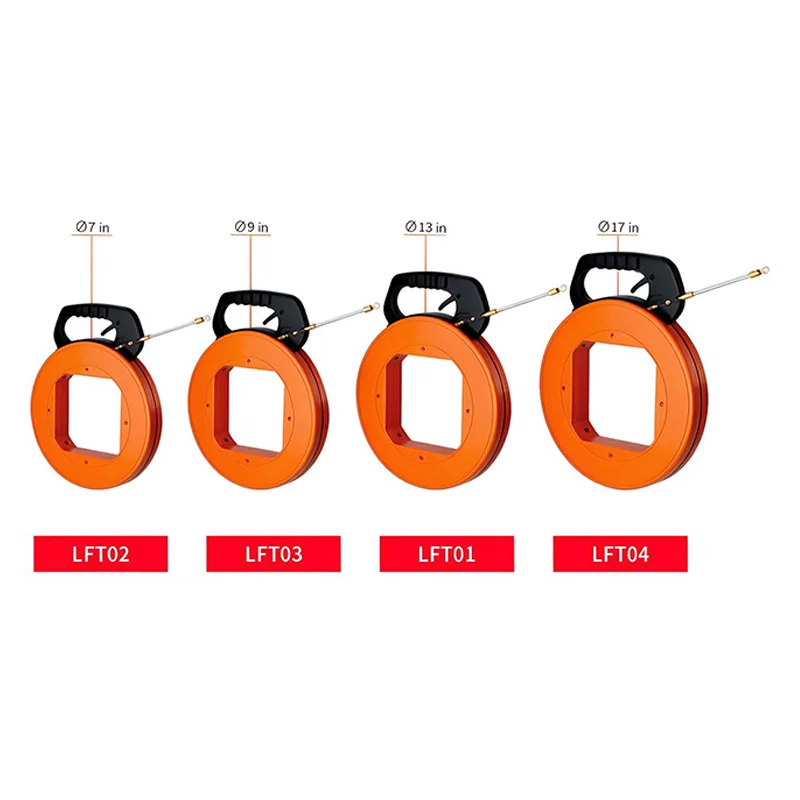
EU Standard Plastic Fish Tapes
LINSHENG EU Standard Plastic Fish Tapes are professional cable installation tools designed according to EN 61386-1 standards for European markets. Made from durable nylon 6/6 with a reinforced carbon steel core, they provide excellent strength, flexibility, and smooth cable pulling performance. Certified with CE and RoHS under ISO9001 quality control, these fish tapes are ideal for electrical wiring, conduit installation, and maintenance projects.
LINSHENG is a professional EU Standard Tools and Equipment manufacturer and supplier in China. We have an experienced sales team, professional technicians, and an after-sales service team.